
I’ve been fascinated by insects my entire life, having learned the basics from my entomologist father, but, like many, I’m especially partial to butterflies. Habitat loss and changing weather is pushing more and more species into the threatened status or worse, and the Monarch butterfly (Danaus plexippus) is no exception.
I’ve thus been making efforts to protect and promote help for this amazing species, most notably with focusing on re-invigorating plantings of Common Milkweed, the primary food source for the Monarch butterfly. Herbicides and intensive farming practices have diminished natural availability of milkweed, so I’ve been working on re-seeding this delightful plant.
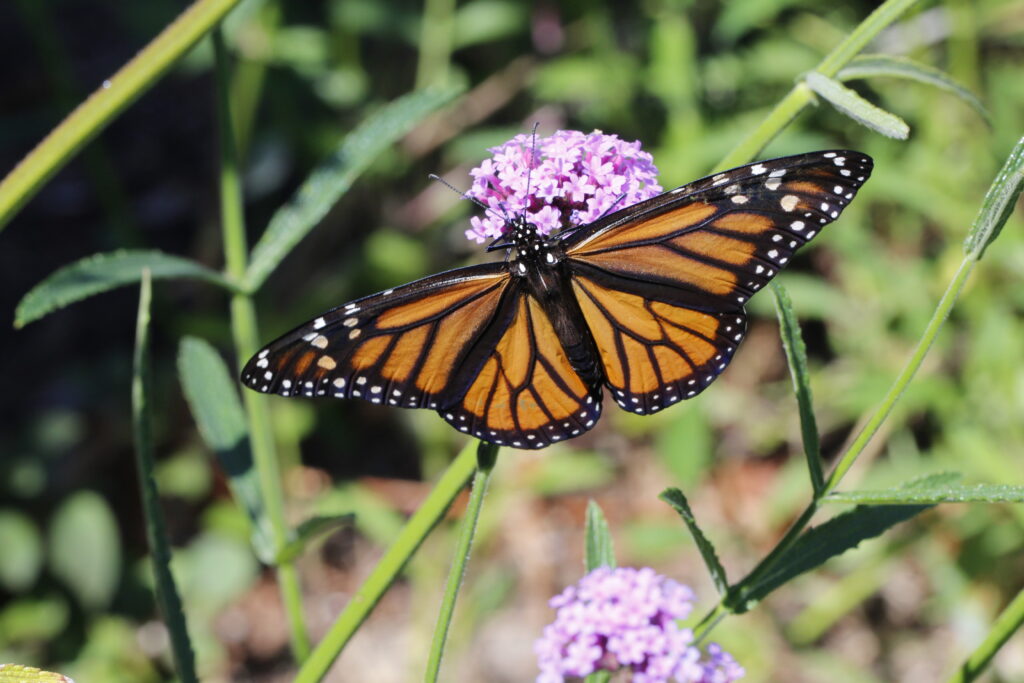
How? To start with, growing my own patch of milkweed to give direct help to Monarchs and other pollinators. I started in 2022 and the patch has been increasing in size to about 4ft by 12ft and was able to supply me with just over a pound of seeds in 2025:
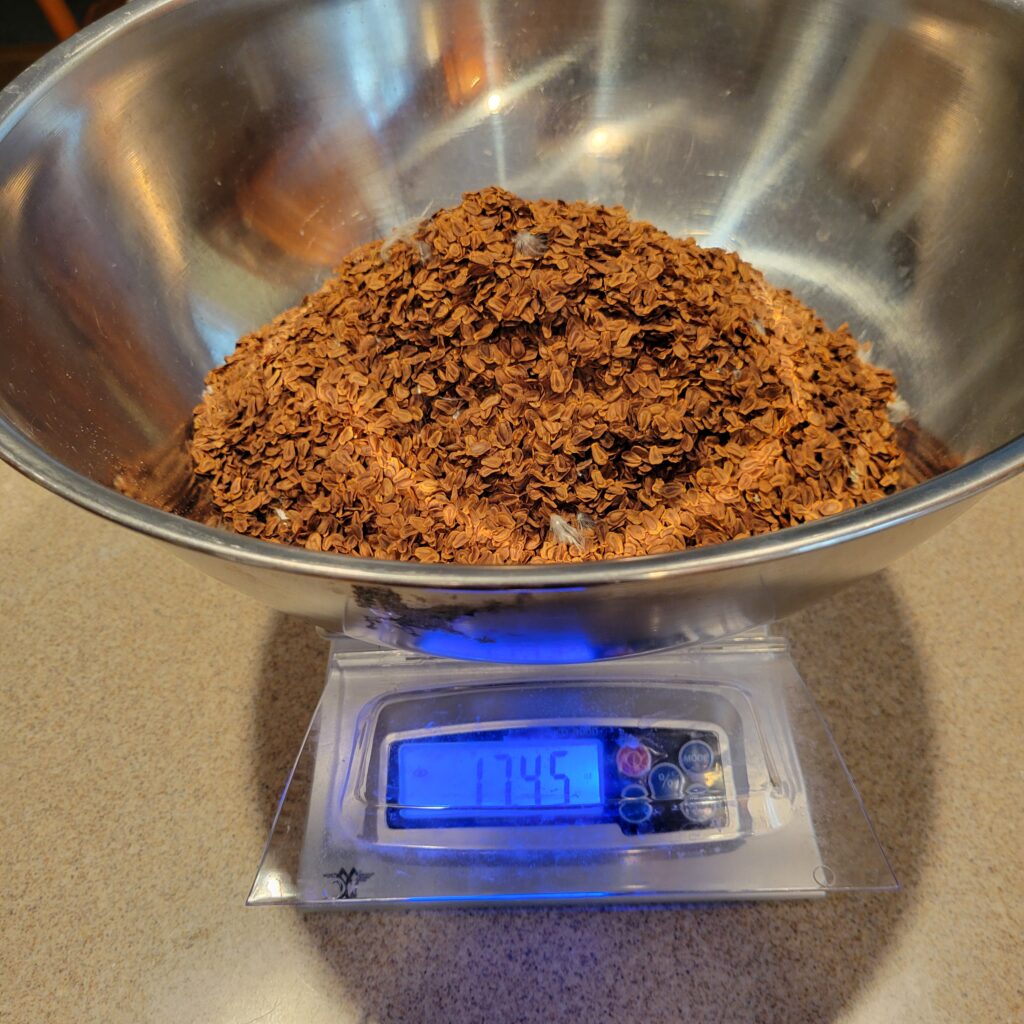
Milkweed seeds are rather small so it takes a lot to make up a pound – nearly a gallon of seeds! I’ve been actively dispersing them along suitable trails, roadsides and vacant lots, both by hand and via “compost bombs”, small compressed dried compost balls with milkweed seeds glued on with a dab of Elmer’s glue. Quick and easy way to toss seeds into a powerline cut, gas pipe cleared path or other empty land.
If you would like some seeds to distribute please contact me at info at bitsofnature.biz. (Just for people living in the natural growing area for common milkweed.)
Our local Wild Birds Unlimited store has also graciously allowed me to have seed packets available for free to anyone visiting their store. Thank you, WBU!
Monarch Posts
- Off to a Good Start – Hatching
- Monarchs – And More! 2026 egg activity
- Proud Papa! – Found some Monarch eggs and they’ve hatched!
- Doubled Odds – Second little critter is out
- So Far So Good – Growing by leaps and bounds
- Empty Nest – A successful “launch”
Resources
- Monarch butterfly – Wikipedia
- Common Milkweed – Asclepias syriaca – Wikipedia
- Save Our Monarchs Foundation – Save Our Monarchs
- Monarch Watch, especially the page on growing Milkweed